
Commercial Vertical Mobility
In a commercial building, the lift is not a convenience. It is the circulation system the entire building depends on.
Offices, hotels, retail and mixed-use buildings in Lucknow and across Uttar Pradesh live or die by how people move between floors. A passenger elevator that is correctly sized, genuinely reliable and properly serviced is infrastructure — not a fitting. Here is how to get it right.
What a commercial passenger elevator is
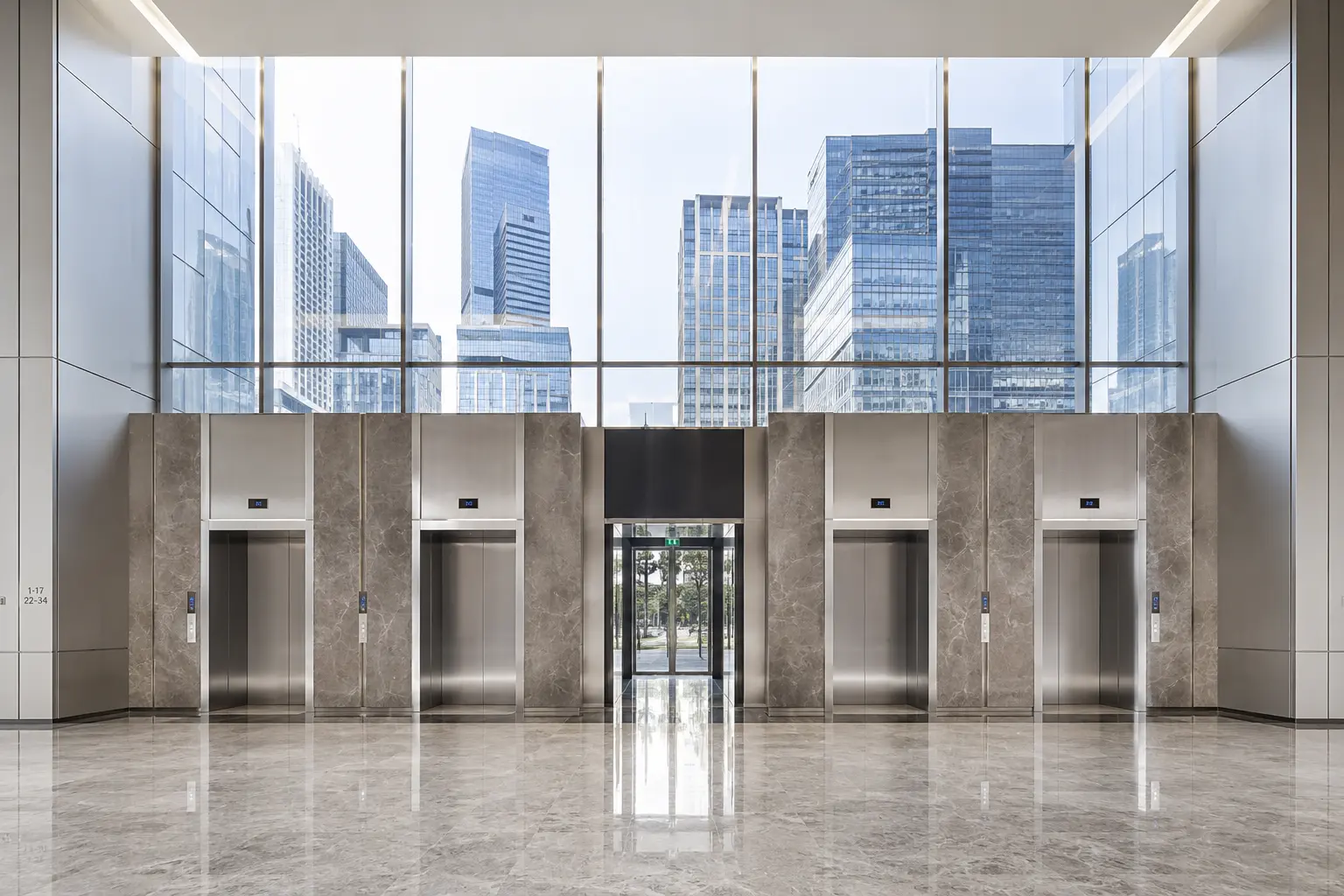
A passenger elevator built for commercial use is engineered for continuous, high-frequency traffic — many people, many trips, every day, for years. Compared with a home lift it runs faster, carries more, and is designed around uptime: the assumption that it must keep working through peak hours without complaint. The real product is not the cabin. It is dependable circulation.
8–20+
persons per car (about 544–1600 kg)
Up to 2.5 m/s
speed matched to building height
Grouped control
multiple cars working as one system
MRL gearless
no machine room, energy-efficient
Where a passenger elevator earns its keep
Offices & IT parks
Sharp peaks at start, lunch and close of day. Capacity has to be calculated for the rush, not the average, or mornings become a queue.
Hotels & hospitality
Guest comfort and service flow at once. A quiet, smooth, accurately levelling ride is part of the impression the building makes.
Retail & mixed-use
High throughput and high visibility. Often glazed, so the lift carries footfall and doubles as part of the customer experience.
The real question: it is rarely “which lift?” It is “how many cars, at what speed and capacity, for the traffic this building will actually see?” That answer comes from a traffic study, not a catalogue.
Plan these six things early
- Run a traffic analysis. Floor population and peak flow decide capacity and how many cars you need.
- Set speed by building height. Taller buildings need faster cars to keep waiting times reasonable.
- Use group or destination control wherever there is more than one lift.
- Design in fire and accessibility compliance from the drawing stage, not at inspection.
- Specify uptime and response time in the service contract, not just the hardware spec.
- Plan modernization windows for the building’s whole life, not only day one.
Shaft, pit and machine room
A commercial lift needs a properly sized shaft, a pit and adequate headroom. Modern machine-room-less (MRL) gearless systems remove the rooftop machine room altogether, freeing space and simplifying the building. Getting these dimensions into the architecture early is what prevents expensive structural changes later.
Sized shaft
Dimensioned to the chosen capacity and speed.
MRL option
No separate machine room on the roof.
Pit & headroom
Set by the car’s speed and load.
A cabin that matches the building
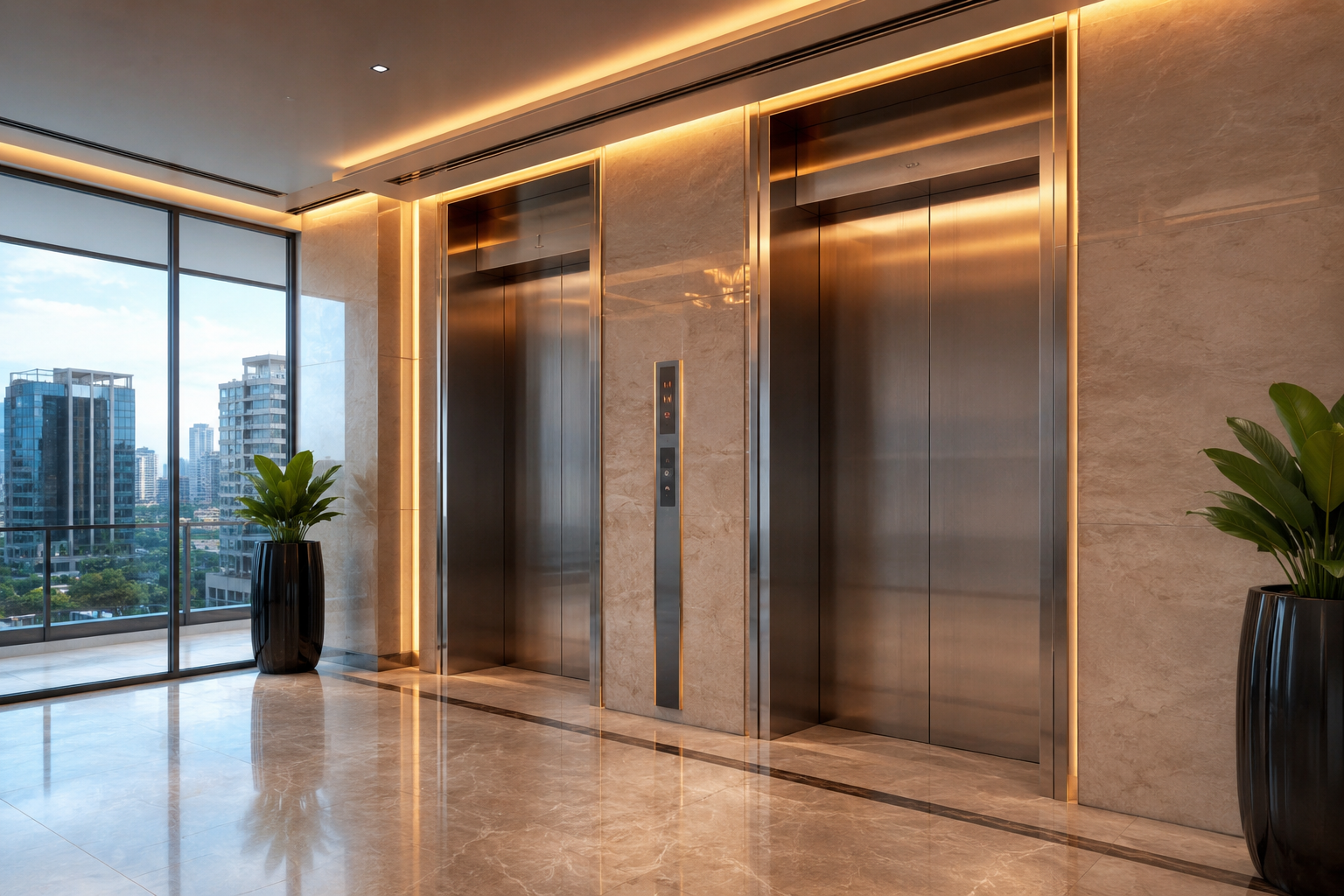
The car is a finishing element. Stainless steel, glass, stone-look laminate, mirror panels, integrated LED lighting, digital position indicators and signage can all carry the building’s identity. In retail and hospitality, a panoramic glass car becomes part of the experience rather than a service item hidden in a core.
The technology, in plain language
Gearless MRL traction
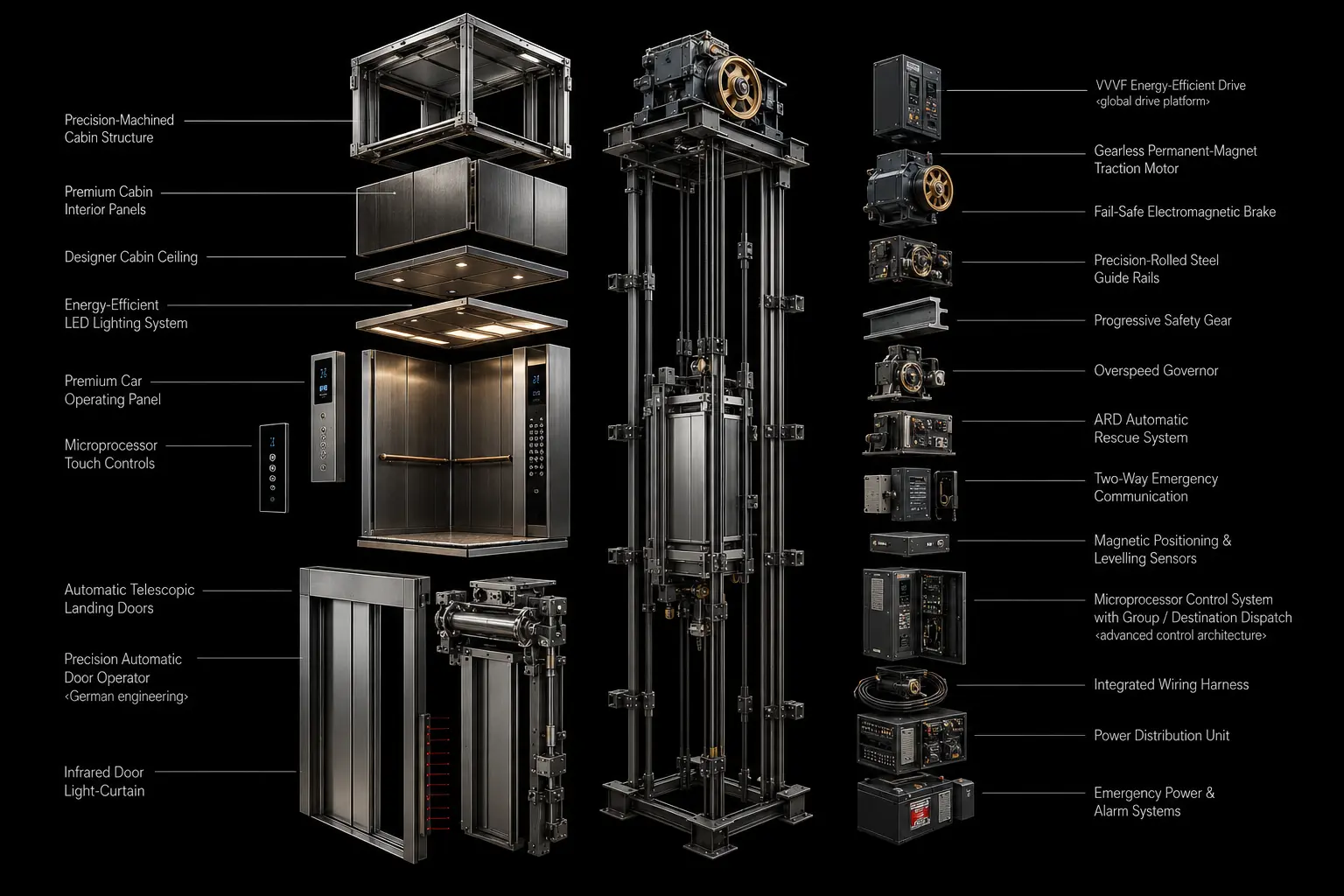
Efficient, smooth and space-saving. The modern default for most commercial buildings, removing the rooftop machine room.
VVVF drive
Variable-frequency control gives precise speed, smooth starts and stops, accurate floor levelling and lower energy use.
Group / destination control
Sends the right car to the right call, cutting waiting and crowding in lobbies with more than one lift.
Uptime is engineered, not hoped for. Every commercial lift should run with an Automatic Rescue Device, fireman’s operation where required, door sensors, overload detection and remote monitoring — so faults are seen and fixed before they become a stranded cabin.
Mistakes we see on commercial projects
- Sizing the lift from a brochure instead of a real traffic study.
- Buying on hardware price while ignoring lifetime service and uptime.
- Installing too few cars, then living with long waits for the life of the building.
- Leaving fire and accessibility compliance until the inspection.
- Treating an aging lift as unfixable instead of modernising it.
- Running with no monitoring, so the first sign of trouble is a breakdown.
Common questions
How do you decide how many lifts and what speed?
From a traffic study based on building population and peak flow. Height sets the speed; population and peak demand set the number of cars and their capacity.
What actually keeps a commercial lift running?
Preventive maintenance and fast response — not just good hardware. Remote monitoring and a clear maintenance contract matter as much as the lift you buy.
What happens in a power cut?
An Automatic Rescue Device brings the car to the nearest floor and opens the doors. Standby power or battery backup keeps critical lifts moving during an outage.
Will it meet fire and accessibility requirements?
It can, when planned in. Fireman’s operation, emergency communication and accessible controls are specified from the start rather than added later.
Can an old commercial lift be modernised instead of replaced?
Usually yes. Drives, controllers, doors and cabins can be upgraded to restore speed, efficiency and safety — often without a full rebuild of the shaft.
How long does installation take?
It depends on building readiness and the number of cars. The schedule is fixed during planning, which is exactly why early coordination saves time on site.
A commercial lift is judged on the day it stops working, not the day it is installed. Specify for the traffic the building will actually see, and put the same effort into who services it as into what you buy.
BRS Mobility Desk — Lucknow
How BRS approaches a commercial lift
BRS Elevator is a vertical-mobility solutions and service company based in Lucknow, working across commercial and residential buildings. On commercial projects we help you size the system correctly, source the right equipment, install it, modernise older lifts, and maintain everything afterwards with responsive service. We are not a manufacturer — we are the partner who stays responsible for keeping your building moving.
Planning a building, or upgrading an existing lift?
Share your building — floors, expected footfall, and whether it is new or already running. We will help you size the system, plan for compliance and uptime, and set up service that actually responds.
Reach BRS directly
Serving Lucknow and across Uttar Pradesh.