
Elevator Modernization & Upgrade
Many buildings replace a lift that only needed modernising — at several times the cost and disruption.
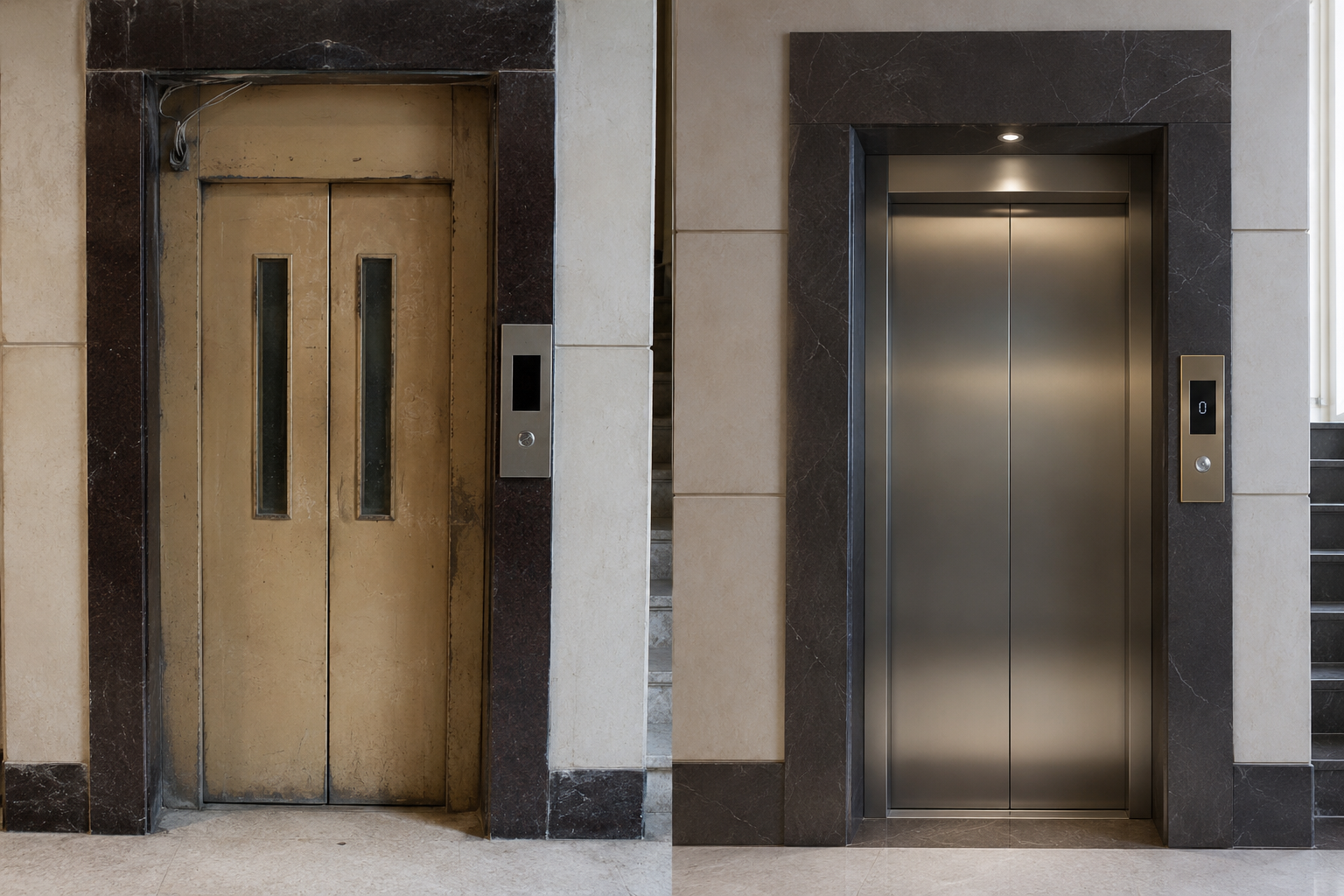
An aging lift is rarely worn out everywhere at once. Usually a few systems — the drive, the controller, the doors — have dated, while the shaft and structure are perfectly good. Modernization upgrades what matters and keeps what works. Here is how to tell what your lift in Lucknow or anywhere in Uttar Pradesh actually needs.
What elevator modernization actually is
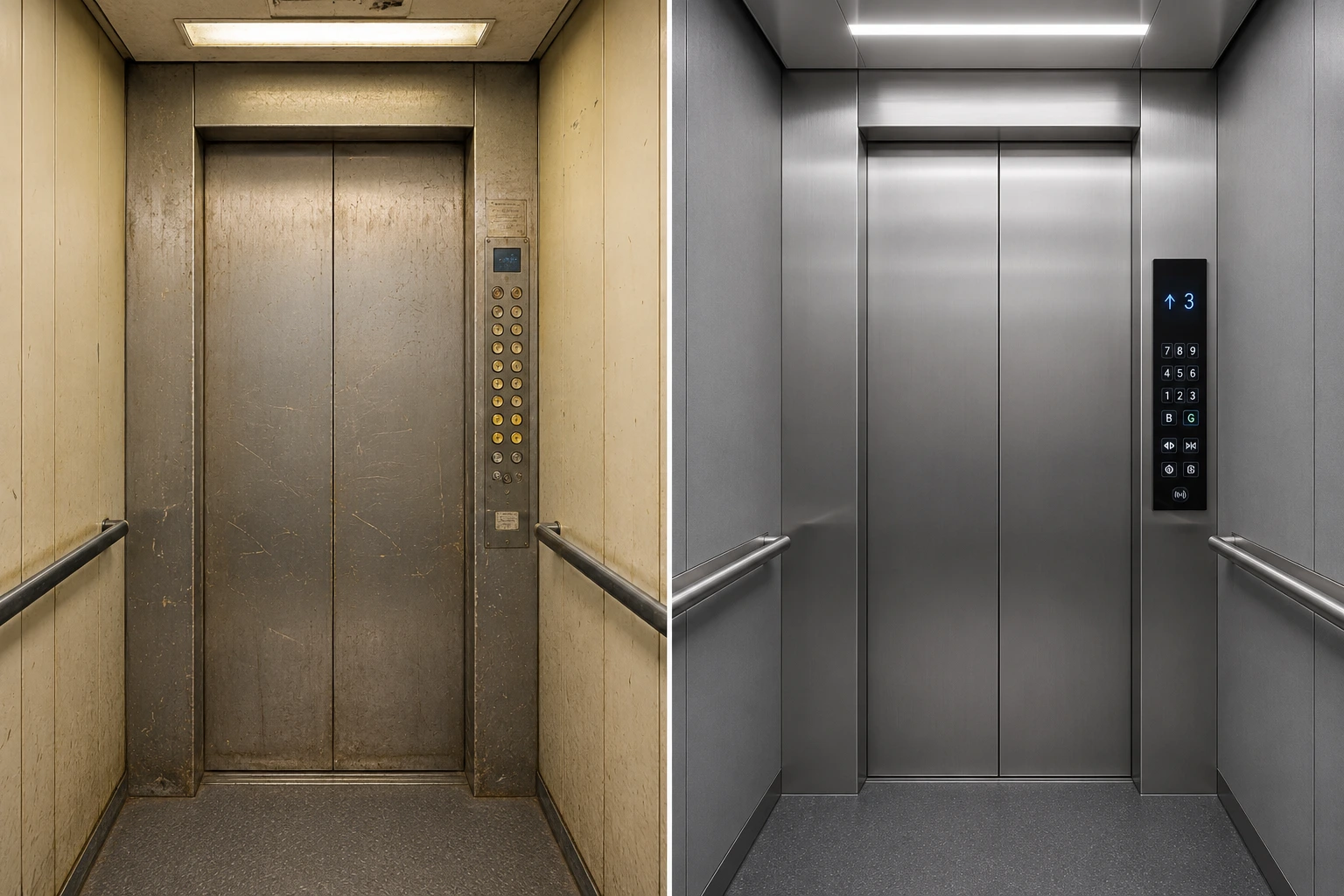
Modernization means upgrading the parts of an existing lift that have aged — the drive, the controller, the door system, the safety devices and the cabin — while keeping the shaft, guide rails and structure you already have. Done well, it restores the ride, safety and efficiency of a new lift for a fraction of the cost and disruption of a full replacement, and it can usually be staged so the building keeps running.
Keep the shaft
Reuse the existing structure and rails
Phased
Upgrade in stages, not all at once
Less downtime
Shorter out-of-service than a rebuild
Restored
Safety and efficiency brought current
Signs it is time to modernise
Ride & reliability
Jerky starts, inaccurate floor levelling, long waits or breakdowns that are becoming routine rather than rare.
Parts & obsolescence
Spares are hard to find or discontinued, so every fault means a long wait and a rising repair bill.
Safety & energy
No automatic rescue device, dated door safety, or an old motor that draws far more power than a modern drive.
A useful rule of thumb: if the structure is sound but the experience is poor, you have a modernization candidate — not a replacement. The fix is usually in the drive, controller and doors, not the shaft.
Plan these things before you start
- Start with an audit. A proper survey shows what is worn, what is obsolete and what is still sound.
- Decide modernise vs replace on evidence, not assumption — often only part of the lift needs work.
- Plan the downtime. Single-lift buildings need a staged approach so residents or staff are not stranded.
- Check parts availability for whatever you keep, so you are not back to square one in a year.
- Bring safety up to current norms — rescue device, door protection and emergency communication.
- Set up maintenance for the upgraded lift from the day it returns to service.
Modernise or replace?
The honest answer depends on the survey, but the logic is simple. Keep and upgrade what is structurally sound; replace only what genuinely cannot be made safe or reliable. Most lifts fall somewhere in between, which is why a staged modernization is so often the right call.
Modernise when
The shaft and rails are sound but the drive, controls or doors are dated.
Replace when
The structure itself is unsafe, or the lift cannot meet current requirements.
Often phased
Critical safety first, then drive and cabin — spreading cost and downtime.
Refresh the experience, not just the machinery
Modernization is also the moment to update what people actually see and feel: a new cabin interior, fresh lighting, a quieter and more accurate ride, modern car-operating panels, digital floor indicators and smoother, safer doors. The lift can come back looking and feeling current, not merely working again.
What actually gets upgraded
Drive & machine
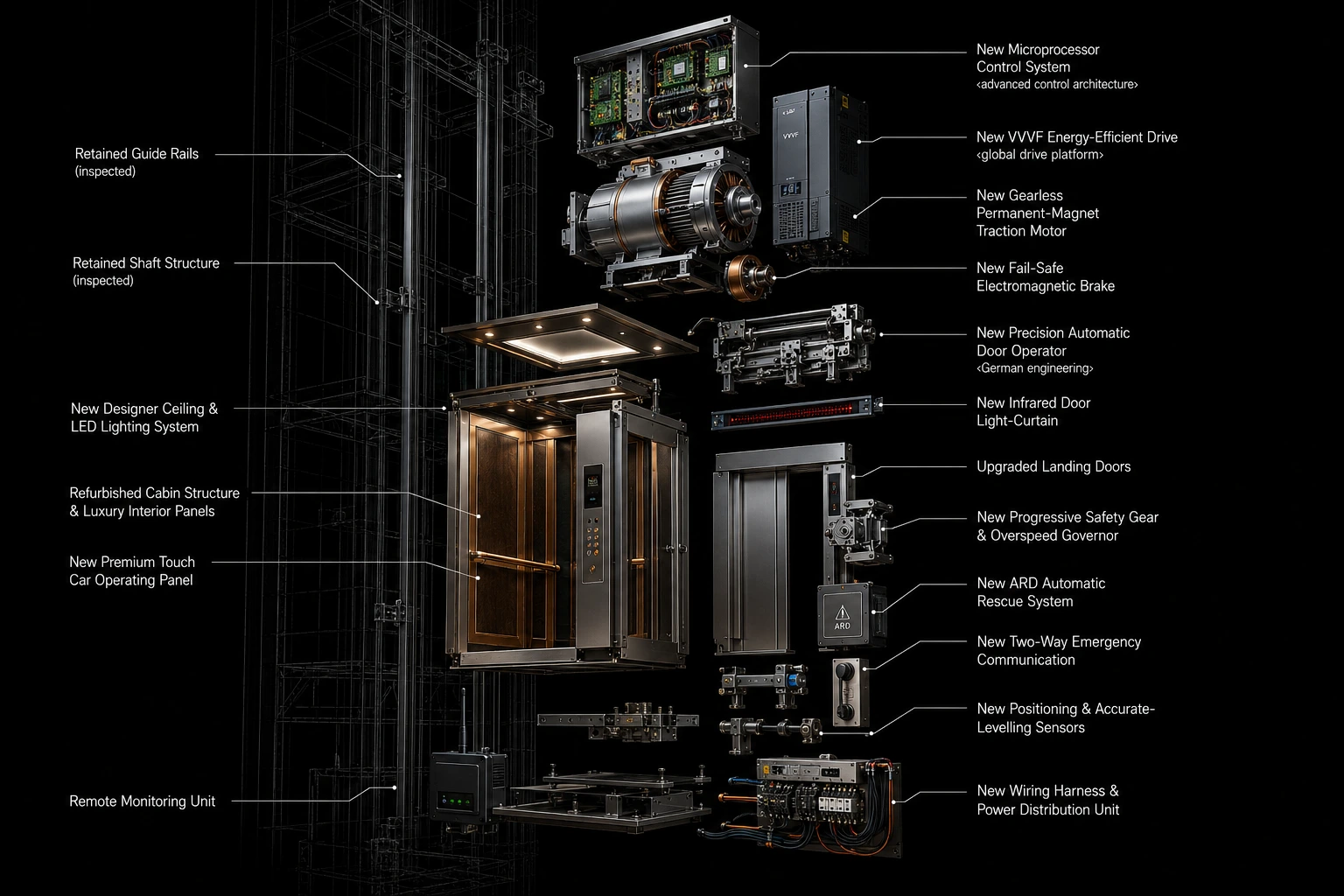
An old motor can be replaced with a gearless or VVVF drive for a smoother ride, accurate levelling and much lower energy use.
Controller & doors
A modern microprocessor controller and new door operator cut breakdowns and bring back fast, reliable, quiet operation.
Safety & monitoring
Automatic rescue device, door sensors, overload protection and remote monitoring bring the lift up to current safety expectations.
The biggest gain is often invisible. A modern drive and controller can sharply reduce energy use and breakdowns at the same time — so a modernised lift frequently costs less to run and less to maintain than the one it replaced.
Mistakes we see with old lifts
- Replacing the whole lift when modernising a few systems would have done the job.
- Refreshing only the cabin while leaving the worn drive and controller untouched.
- Ignoring spare-part obsolescence until the lift is stuck waiting for a part.
- Starting work with no downtime plan in a single-lift building.
- Skipping the safety upgrade because the lift “still runs”.
- Choosing the cheapest bid, then discovering it covered only half the problem.
Common questions
How do I know whether to modernise or replace?
An audit decides it. If the shaft, rails and structure are sound and only the drive, controls or doors are dated, modernization is usually the better-value route.
How much downtime does it involve?
Less than a full replacement, and it can be staged. In single-lift buildings the work is planned around the residents or staff so the lift is out of service for the shortest practical time.
Can you modernise a lift of any make?
In most cases, yes. Drives, controllers, doors and cabins can be upgraded across common makes — the audit confirms what fits your specific lift.
Will the modernised lift meet current safety norms?
That is a core aim of the work — adding an automatic rescue device, modern door protection and emergency communication so the lift is safe by today’s standards, not yesterday’s.
Can it be done in phases?
Often, yes. Critical safety and reliability items can come first, with cabin and cosmetic upgrades following — spreading both cost and disruption.
Will it really save energy?
A modern gearless or VVVF drive typically uses far less power than an old motor, so a modernised lift usually costs less to run as well as to maintain.
Before you replace a lift, find out what is actually wrong with it. More often than not the structure is fine and only the working parts have aged — and modernising those costs a fraction of a full rebuild.
BRS Mobility Desk — Lucknow
How BRS approaches modernization
BRS Elevator is a vertical-mobility solutions and service company based in Lucknow, working across homes and commercial buildings. We start with an honest audit, tell you clearly what should be modernised and what can be kept, carry out the upgrade with the least practical disruption, and maintain the lift afterwards. We are not a manufacturer — we are the partner responsible for keeping your building moving.
Not sure if your lift needs modernising or replacing?
Tell us the age and type of your lift and what is going wrong with it. We will audit it, tell you plainly what it needs, and plan the upgrade around your building — honestly, with no pressure to over-spend.
Reach BRS directly
Serving Lucknow and across Uttar Pradesh.